

Learn more about IBU and Plato in fruit beer to understand Fruity Monkey Beer. These elements give most beers their characteristic bite, adventurous aftertaste and delicious twist.
What is IBU in fruit beer?
The IBU is the International Bitterness Unit (sometimes ‘International Bittering Unit’). It is a recognised international beer standard for measuring bitterness on the tongue. Beer is bitter because of, among other things, alpha acids found in the resin of hops used for brewing.
In theory, the higher the IBU, the bitterer the beer. Many beer drinkers use IBU to determine a particular beer’s hop-forward flavours. There is a presumed correlation between bitterness and the number and type of hops used. For example, American-style IPAs. Due to using more hops than their traditional European counterparts, they tend to have a high IBU. Hoppy-beer fanatics often favour beers brewed with a higher IBU.
And yet, The Oxford Companion to Beer is one of many voices doubting the usefulness of IBU to the beer consumer. Learning how to read a beer label is important, but it does not provide a full picture. Many factors affect a beer’s flavour profile, complexity and balance.
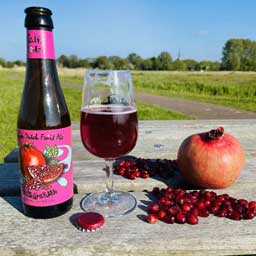
People often think lighter or easy-drinking beers lack flavour. Due to fewer hops and less bitterness, these beers tend to have a lower IBU. Yet this flavour argument is not convincing.
Fruit beers tend to have a lower IBU. But Fruity Monkey Beer puts the exhilarant flavour experience first. Our beers are not too bitter, despite a higher IBU than people often expect in fruit beer.
Fruity Monkey Beers have an IBU of 20.
What is Plato in fruity beer?
First, it is important to consider the brewing process.
Fermented beverages — such as beers, wines, spirits and ciders — start life as a sugary liquid. Added yeast then eats then sugars in the liquid. This process is fermentation, and it produces ethanol (alcohol) and carbon dioxide (CO2). Fermentation also influences the beverage’s characteristic flavours.
The sugary liquid used in beer is wort. Brewers extract wort from malt (processed grains used for brewing).
The Plato Gravity Scale is popular with European craft beer brewers. They use it to measure the weight (%) of dissolved solids in wort. In general, these dissolved solids are sugars. A higher percentage of means yeast has more to eat during fermentation. The result is higher alcohol levels.
For example, a Plato reading of 10 indicates the wort is about 10% dissolved sugars and 90% water. It is important to note that Plato does not represent the finished beer’s ABV (alcohol by volume). Brewers use it during brewing to decide if their desired beer style needs more sugars or water.
Fruity Monkey Beers have a Plato reading of 10.
Now you understand more about fruit Beer IBU & Plato. So why not swing into Fruity Monkey Beer’s brisk, bright flavours and learn more about the process.